
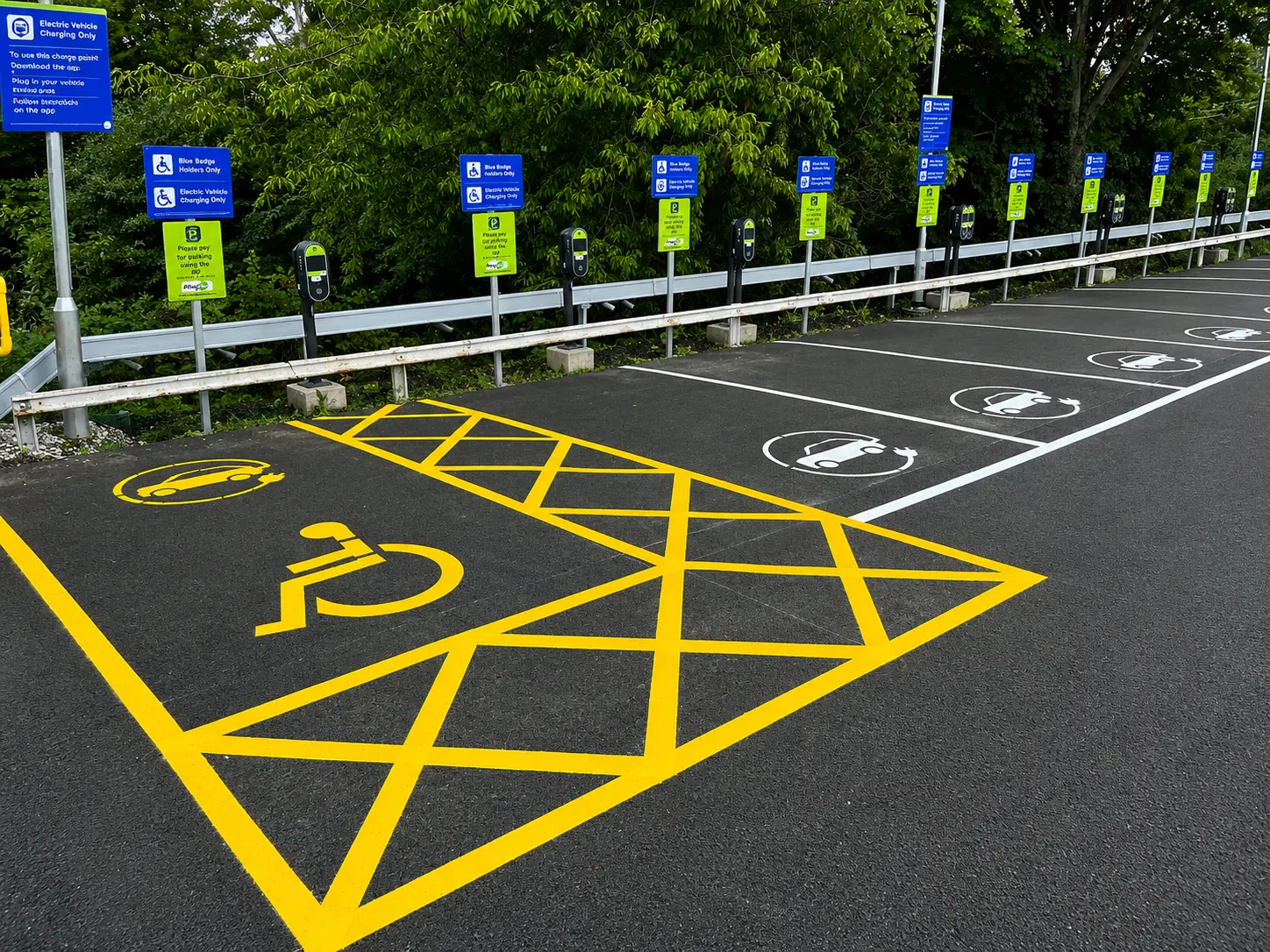
Provision of EV Charging Points — GRIP 5–8
Civil and structural engineering design for the rollout of EV charging infrastructure across operational railway station car parks, including multi-storey and sub-surface environments.
Overview
GSB provided civil and structural engineering design support for the installation of Electric Vehicle (EV) charging infrastructure across operational railway station car parks, including surface-level and multi-storey facilities. Scope included foundations, plinths, ducting routes, containment systems, hardstanding works, and car park reconfigurations to accommodate EV charging bays and DDA-compliant parking and pedestrian access arrangements within live rail environments.
Challenge
Works were undertaken within constrained operational station car parks — including multi-storey and sub-surface environments — where restricted access, structural limitations, buried services and continuous vehicle and pedestrian movements had to be carefully managed. Several locations required compliance with sub-surface fire and life safety regulations relating to fire strategy and equipment positioning. The project required close coordination between Network Rail, Train Operating Companies, Distribution Network Operators and electrical designers to manage operational, technical and programme interfaces, while maintaining operational capacity and complying with Network Rail standards and CDM regulations.
Solution
We delivered coordinated civil and structural engineering design aligned to Network Rail GRIP processes. This included site assessments and surveys to identify civil, structural and buried services constraints, followed by the design of DNO transformer and LV panel foundations, EV charger foundations, plinths, ducting and containment routes, and hardstanding modifications. Designs considered vehicle loading, drainage, fire safety, accessibility and the safe segregation of vehicles and pedestrians, with close coordination between civil, structural and electrical disciplines.